The number one use for AI agents and assistants is shopping - and Zuckerberg just proved it. A short take on what happens when the assistant becomes the storefront.
BREAKING: Instacart Is for Sale - and Only the Ads Are Worth Buying
Instacart is exploring a sale to Uber or DoorDash. The picking model is archaic and the growth has stalled against the market - the only asset worth the premium is the advertising business. My take, and why Amazon only bids if the inventory joins its main ads roster.
Show notes
The news: Instacart exploring a sale, preliminary talks with Uber and DoorDash (The Information, Oct 23, 2026). Stock +9% Friday; ~$12B market value; $16-17B at a typical takeover premium.
What a buyer is actually buying: users and frequency, not a growth engine - Instacart is growing slower than online grocery overall.
Why the picking model is archaic: human shoppers in other retailers' stores vs Walmart first-party, Amazon Now, and bundled platforms.
The real prize: Instacart Ads - the toll on every basket, whoever picks it.
The Amazon question: a bid only makes sense as an ads-inventory play.
For brands: fewer, bigger retail media networks; grocers lose their neutral partner.
Source: The Information report via Reuters, October 23, 2026. Talks are preliminary; no deal is guaranteed.
Transcript
Daniel: Breaking news on Digital Shelf Life, with Ryan Craver. I'm Daniel.
Maya: And I'm Maya. Instacart is for sale.
Daniel: Exploring a sale, officially. The Information reported Friday that Instacart has held preliminary talks with Uber and DoorDash. No deal is guaranteed, and Instacart declined to comment.
Maya: The market commented for them.
Daniel: It did. Instacart stock closed up about nine percent Friday. Uber fell about three, DoorDash about four. Instacart's market value was roughly twelve billion dollars at Thursday's close.
Maya: And with a normal takeover premium?
Daniel: Thirty to forty percent gets you to sixteen or seventeen billion. That is the price tag on the table.
Maya: For what, exactly? That is the question Ryan keeps asking. What is the buyer actually buying?
Daniel: His answer is blunt. One asset is worth the money: the advertising business. Everything else is a user list attached to an archaic model.
Maya: Archaic is a strong word.
Daniel: Defend it, then. Instacart's core model is a human being walking the aisles of somebody else's grocery store, picking bananas off a retail shelf, and handing them to a driver.
Maya: That was genius in twenty fifteen.
Daniel: In twenty fifteen it was the only way to do online grocery without building warehouses. But the world moved. Walmart built pickup and delivery into its own stores and its own app. Amazon is rolling out Amazon Now, groceries in thirty minutes or less. Kroger and Albertsons push their own channels.
Maya: So the pickers are competing with the store itself.
Daniel: With the store, the retailer's own app, and platforms that bundle grocery with rides and restaurant delivery. The middle layer gets squeezed from both sides.
Maya: And the growth story?
Daniel: That is the part the stock chart hides. Online grocery keeps growing, but Instacart is not growing at the rate online grocery is growing.
Maya: Growing slower than your own market means one thing.
Daniel: Losing share. Slowly, politely, but losing it. So a buyer is not purchasing a growth engine. A buyer is purchasing installed users, an Instacart Plus membership base, and frequency it does not have to build.
Maya: Buying users is not automatically dumb.
Daniel: No. Buying users at the right price is a strategy. Uber bought Postmates for users. Uber agreed in July to buy Delivery Hero for nearly fifteen billion. Consolidation is Uber's playbook right now.
Maya: But you said the ads are the prize. Why?
Daniel: Because the ads business is the one part of Instacart with real margin and real leverage. Brands pay to show up at the digital shelf at the exact moment a shopper is building a basket. Closed loop: the ad and the purchase happen in the same place.
Maya: Retail media, grocery edition.
Daniel: Exactly. And it travels. If Uber owns that business, Instacart's advertiser relationships and retailer inventory plug straight into Uber's ads ambitions. If DoorDash owns it, same story, bigger grocery footprint.
Maya: The delivery operation does not travel the same way?
Daniel: The delivery operation is people picking from stores the buyer does not own. The ads business is a toll on every basket, whoever picks it. Ryan's rule from episode one applies: own the toll, not the carrying.
Maya: Okay, the question everyone in Seattle is asking. Why not Amazon?
Daniel: Ryan's answer: potentially interested, but not for the reasons people assume.
Maya: Amazon does not need grocery users?
Daniel: Amazon has Prime. Amazon does not need a picking network; it is building its own rapid delivery. Bolting Instacart's service onto Amazon's service adds almost nothing operationally.
Maya: So what would Amazon actually want?
Daniel: The shelf space. If Instacart's retailer inventory, hundreds of grocery and retail storefronts, got folded into Amazon's main roster of advertising inventory, inside the Amazon ads machine and the DSP, that is real. Amazon selling ads against baskets it does not fulfill.
Maya: Amazon as the ad layer over everyone else's stores.
Daniel: Which is the toll booth endgame, and it is the only version of an Amazon bid that makes strategic sense. Absent that, Amazon watches Uber and DoorDash bid and smiles either way.
Maya: What about the grocers in all this? Instacart was supposed to be their neutral partner. The Switzerland of grocery.
Daniel: Switzerland just got annexed. If your digital storefront and your ad platform are owned by Uber or DoorDash, your partner is now also your biggest competitor's owner. Expect the big retailers to accelerate their own channels even faster.
Maya: And for brands, the CPG advertisers listening?
Daniel: Consolidation of the shelf. Fewer, bigger retail media networks, more bundled buying, and one less independent place to spend. The negotiation table gets smaller for everyone except the platforms.
Maya: Bottom line, then. Does a deal happen?
Daniel: Talks are preliminary, and antitrust will have opinions, especially about DoorDash. But the logic is not subtle. Instacart proved Americans will buy groceries online.
Maya: It just never owned the store.
Daniel: Or the shelf. Or the road. Now the road is doing the buying, and the only part of the company truly worth the toll is the ads.
Maya: Digital Shelf Life. Instacart's expiration date may have just been printed.
Daniel: We will be watching the filings. See you next episode.
Personal Assistants (Muse and Instinct) Trump Chatbots
Part 4, and the point of the whole series: personal assistants bring AI to the masses.
Chatbots haven't truly been adopted by everyday people, and almost nobody will pay for one. A chat window is a destination you have to remember to visit. An assistant is different - it lives in your messages, your calendar, your day, and it does things instead of just answering things.
That's where Muse and Instinct come in: AI built for everyday, every-hour usage, distributed through the apps people already live in. The leaderboard can freeze all it wants. The next hundred million users won't arrive through a chatbot. They'll arrive through an assistant that was already in their pocket.
AI Spend Doesn't Equal Traffic
Part 3: spend and traffic are telling two different stories.
In a16z's latest AI leaderboard, only one app dominated across all three measures - web traffic, mobile traffic, and consumer spend. Everyone else is strong in one lane and weak in the others. Big traffic with no revenue. Real revenue with modest traffic.
For anyone allocating budget or building in this space, that's the tell. The consumer AI market isn't one market. It's a traffic game, a subscription game, and an attention game being played by different players - and almost nobody is winning all three at once.
Who's Actually Paying for AI?
Part 2 of the a16z leaderboard story: the spenders.
a16z's latest data shows only the builders and the productivity crowd are actually paying for AI subscriptions. The masses just aren't interested in paying. Free tiers get the traffic; a thin slice of power users carries the revenue.
That's the uncomfortable math under the whole consumer AI boom. Hundreds of millions of users, a small fraction of payers. The models keep getting more expensive to run while the willingness to pay stays flat for everyone outside the builder class.
Which raises the real question: where does the money come from? Advertising, distribution bundles, or assistants people actually live inside. Part 3 looks at why spend and traffic don't move together.
The AI Leaderboard Is Freezing Over
Three years into tracking consumer AI, the leaderboard is barely moving.
In the latest a16z Top 100 Gen AI apps, only 11 products are making their first-ever appearance - the smallest number of debuts across all seven editions of the list. ChatGPT is still #1 by traffic. But Claude has quietly become the clear #3, passing DeepSeek and Perplexity, and going neck-and-neck with Gemini on paid subscribers.
The real story isn't who's winning. It's how frozen the top has become - and what that means for new apps trying to break in. The window for a new consumer AI app to crack the top tier is closing. Distribution and habit beat novelty now.
Part 1 of 4 on the state of consumer AI.
Programmatic Has Been Cancelled (Apple's Doing)
iOS 27's WebKit update blocked programmatic ad tech from Safari. ATT deja vu - but this time Apple blocked the pipes, not just the identity.
Read moreAmazon = Toll Booth of E-commerce
Amazon's Accelerate conference wrapped in Seattle this week with three announcements every seller should know: Seller Assistant going agentic inside Claude and Amazon Quick, Walmart/Shopify/eBay/TikTok orders managed from Seller Central, and free 24-hour payouts.
The pattern across all three is unmistakable — Amazon is positioning itself as the toll booth of e-commerce, taking a cut of every order on every channel.
Here's the 60-second breakdown and the play for sellers.
OpenAI $100 billion in annual advertising sales by 2030?
OpenAI's staggering advertising ambitions — a reported $100 billion a year by 2030 — and what it means for Google, Meta, and the future of the ad industry. A 78-second explainer on the race to monetize AI attention, and his most-watched video to date.
Phase 3 of AI: Employees vs Tokens vs Model Routing
Phase 1 of AI was magic, Phase 2 was adoption — Phase 3 is economics. Companies are now forced to choose between employees, tokens, and model routing, and how that trade-off is reshaping budgets and strategy. The great AI cost debate.
Instinct vs Meta's Muse for the AI Assistant Race #instinct #muse #ai
With no unfamiliar interface to learn, calling or texting your AI like a person leads to more usage and longer conversations, with simplicity driving adoption. Instinct has the Silicon Valley buzz, while Meta’s Muse has the distribution potential of 4 billion users globally — and the question now is who wins, and how soon Google, ChatGPT, and Apple launch something similar.
Why would Stripe acquire OpenRouter?
Stripe acquiring OpenRouter sounds like an odd pairing — until you think about where AI payments are headed. The strategic logic: who gets the toll-booth position on AI agent transactions, and why owning the model gateway could be Stripe's smartest move. A short, sharp take on one of fintech's most interesting what-ifs.
Microdramas Now Exceed Daily Average Viewing of Netflix, Amazon Prime, Disney+
Quibi may have been early to the insight — but microdramas have the distribution, economics, and audience behavior that Quibi lacked. ReelShort users now average 35.7 daily minutes in the U.S., above Netflix, Prime Video, and Disney+ on mobile.
Space race. AI chip race. Taxi race. Drones race?
Amazon vs Walmart vs DoorDash vs Uber. Everyone wants a piece of final mile delivery via air.
February 2026 LLM Market Share Snapshot
February 2026 was a watershed month for large language models: growth is still explosive, but power is clearly consolidating around a handful of consumer chatbots and enterprise platforms.
Market size and momentum
The wider LLM and generative AI market continues to expand at a double‑digit clip, driven by enterprise adoption and AI‑native products. Analysts now peg the global LLM market in the mid–single digit billions, with forecasts pushing it toward tens of billions by the early 2030s. Transformers remain the dominant underlying technology, controlling a large share of generative AI revenue across language, vision, and multimodal workloads.
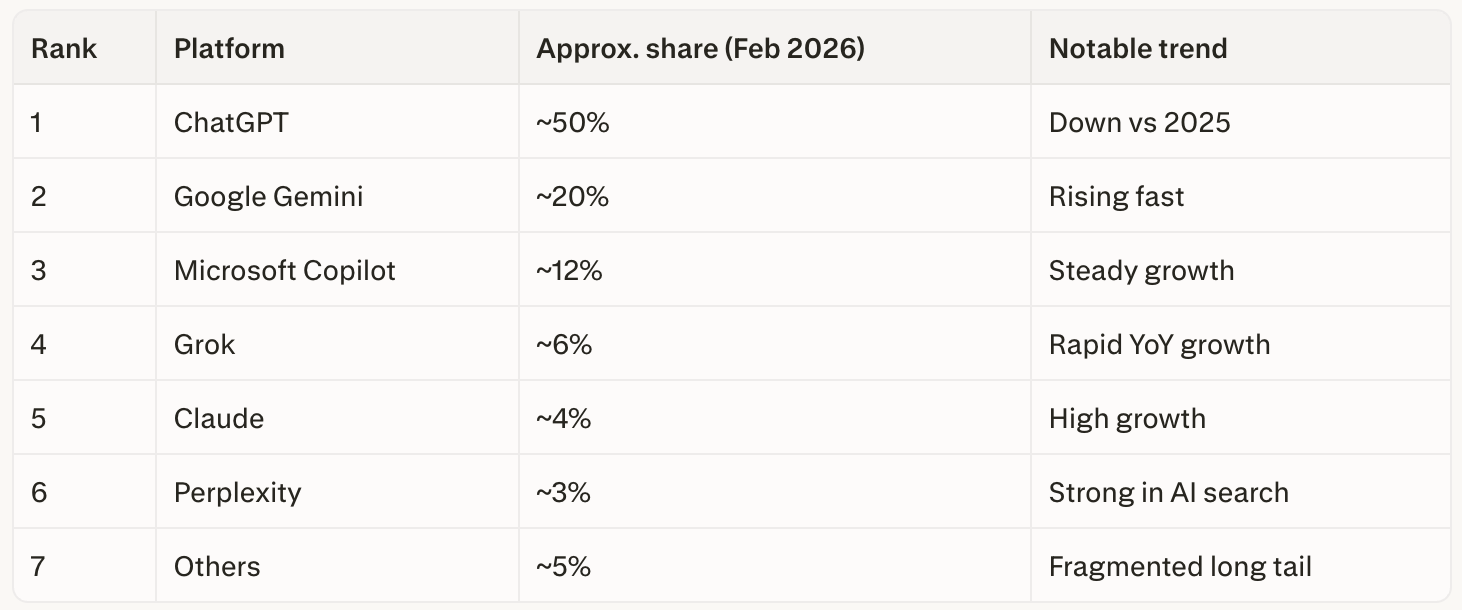
February 2026: Consumer LLM usage
On the consumer side, February 2026 confirmed that we’re in an oligopoly, not a monopoly. ChatGPT remains the primary entry point for most users, but its share is steadily eroding as Gemini, Copilot, and a long tail of vertical assistants mature.These ranges blend app‑store share, web traffic, and AI search data; they are best interpreted as directional rather than precise.
Gemini’s February Breakout
If February had a single headline, it was Gemini’s acceleration. In AI search share, Gemini has broken into the high teens to around 20%, up significantly year‑over‑year. Mobile usage shows a similar pattern as Gemini benefits from default placement and deep integration across Android and Google Workspace. For product and growth teams, this is a clear demonstration that distribution and ecosystem lock‑in can chip away at an early‑mover advantage.
ChatGPT: From Monopoly to Anchor Tenant
OpenAI’s ChatGPT is still the anchor tenant of the LLM ecosystem, but the days of near‑70% dominance are over. Its share has fallen into the ~50% range even as absolute usage continues to grow. In AI search experiences, ChatGPT‑based offerings still command a majority, but that number has started to plateau. The implication: we’re shifting from “everyone launches on ChatGPT” to a multi‑model reality where Gemini, Claude, Copilot, and open‑source backends coexist behind the same UI.
Second Wave: Claude, Copilot, Perplexity and Others
Below the top two, a second wave of fast‑growing specialists and ecosystem plays is emerging.
Microsoft Copilot sits in the low‑teens, powered by distribution inside Windows, Office, and Edge rather than pure consumer brand pull.
Claude, while still in the single digits, is one of the fastest‑growing enterprise assistants, especially for long‑context knowledge work and development.
Perplexity, with a few points of the AI search market, over‑indexes among power users looking for conversational search and source transparency.
Chart Candy: Solo Activities, OpenAI, SaaSpocalypse
CHART Candy: Sharing a few compelling charts from the past week covering retail, marketing, AI, and the economy. Let the visuals do the talking - swipe through the carousel to see what caught my eye.
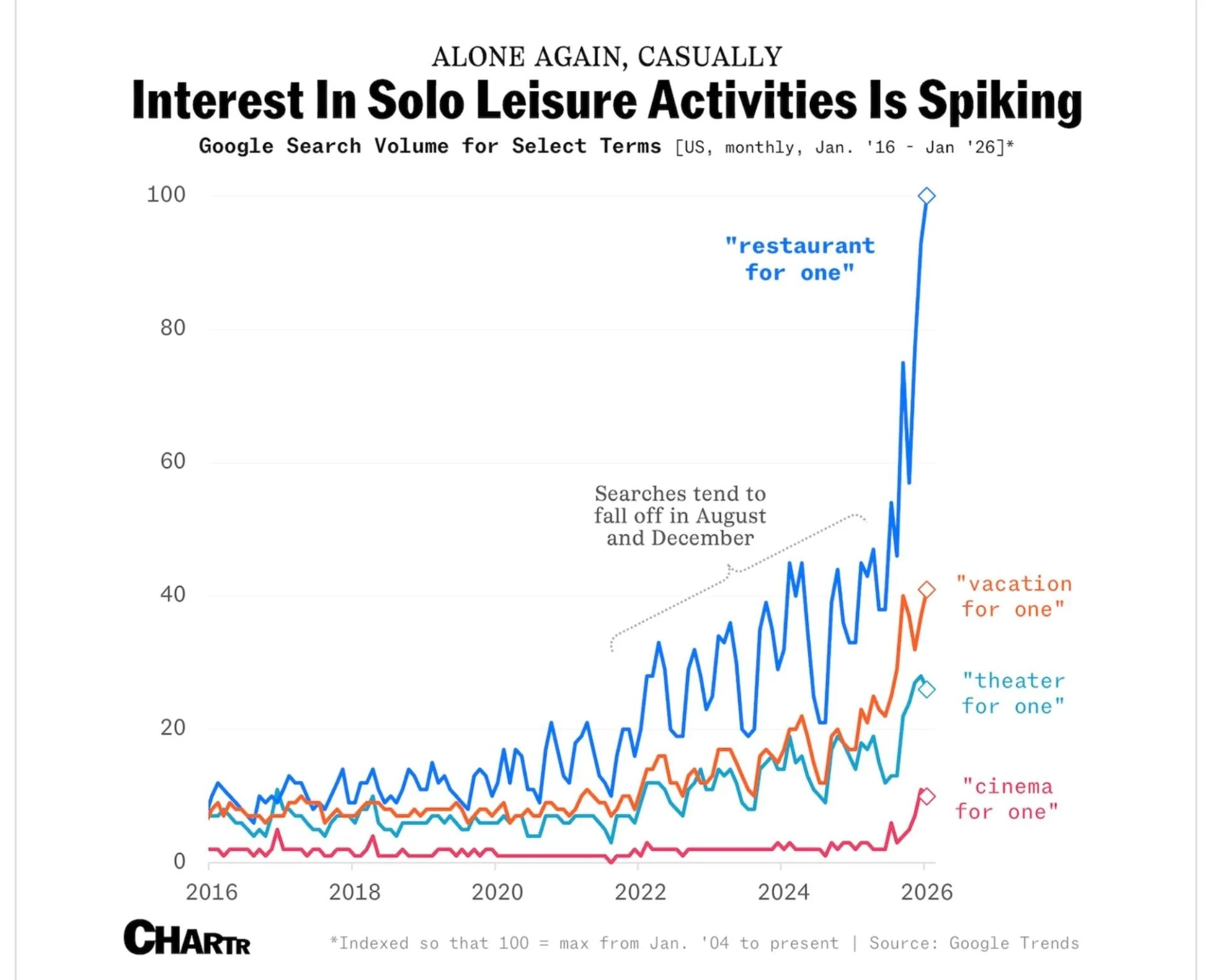
1. Solo activities are all the rage. "Restaurant for one." I'm not ashamed. I've done it. Just don't tell anyone.
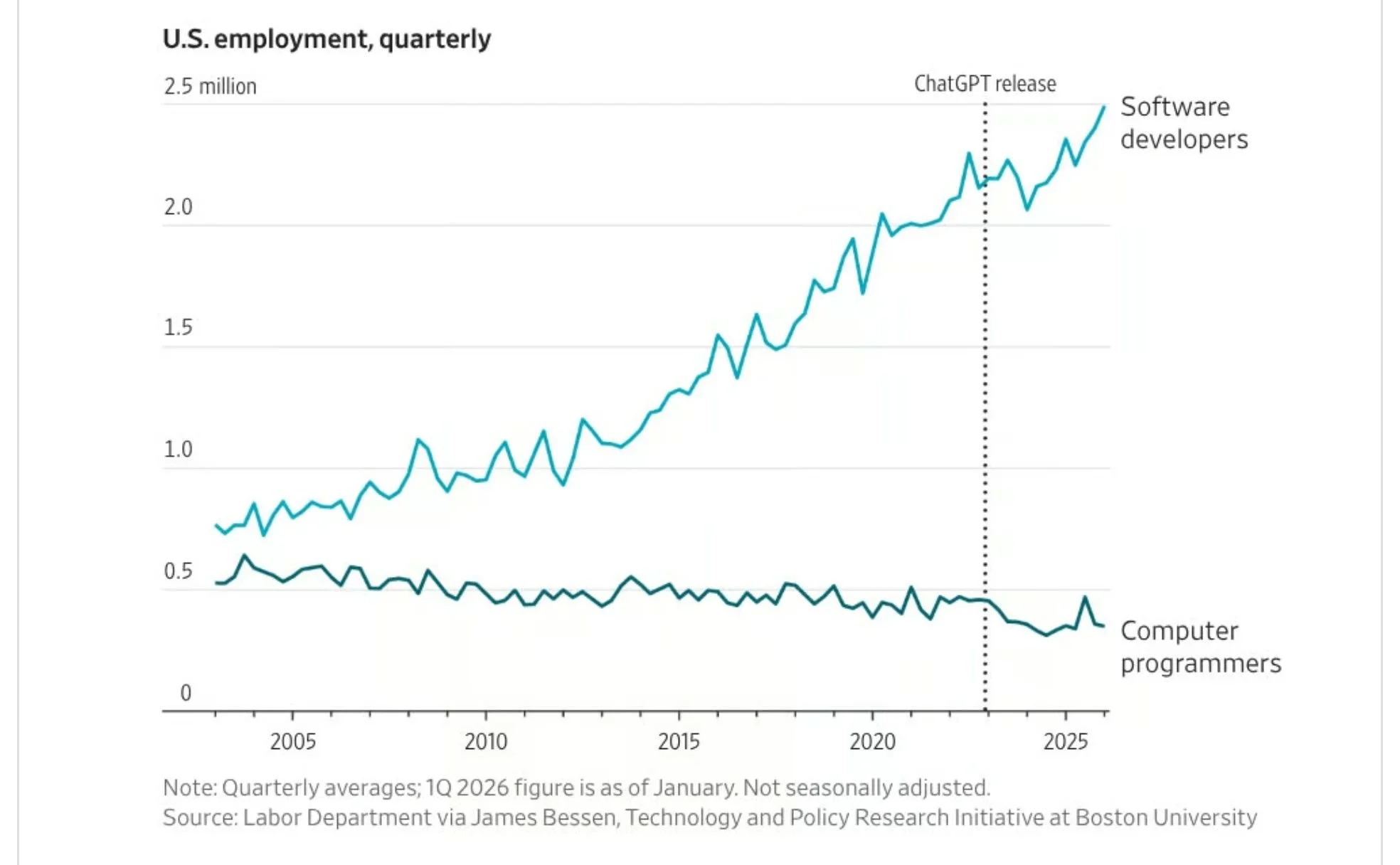
2. Despite "SaaSpocalypse," software developer employment is up considerably more than decline in computer programmers. AI driving more building thus far.
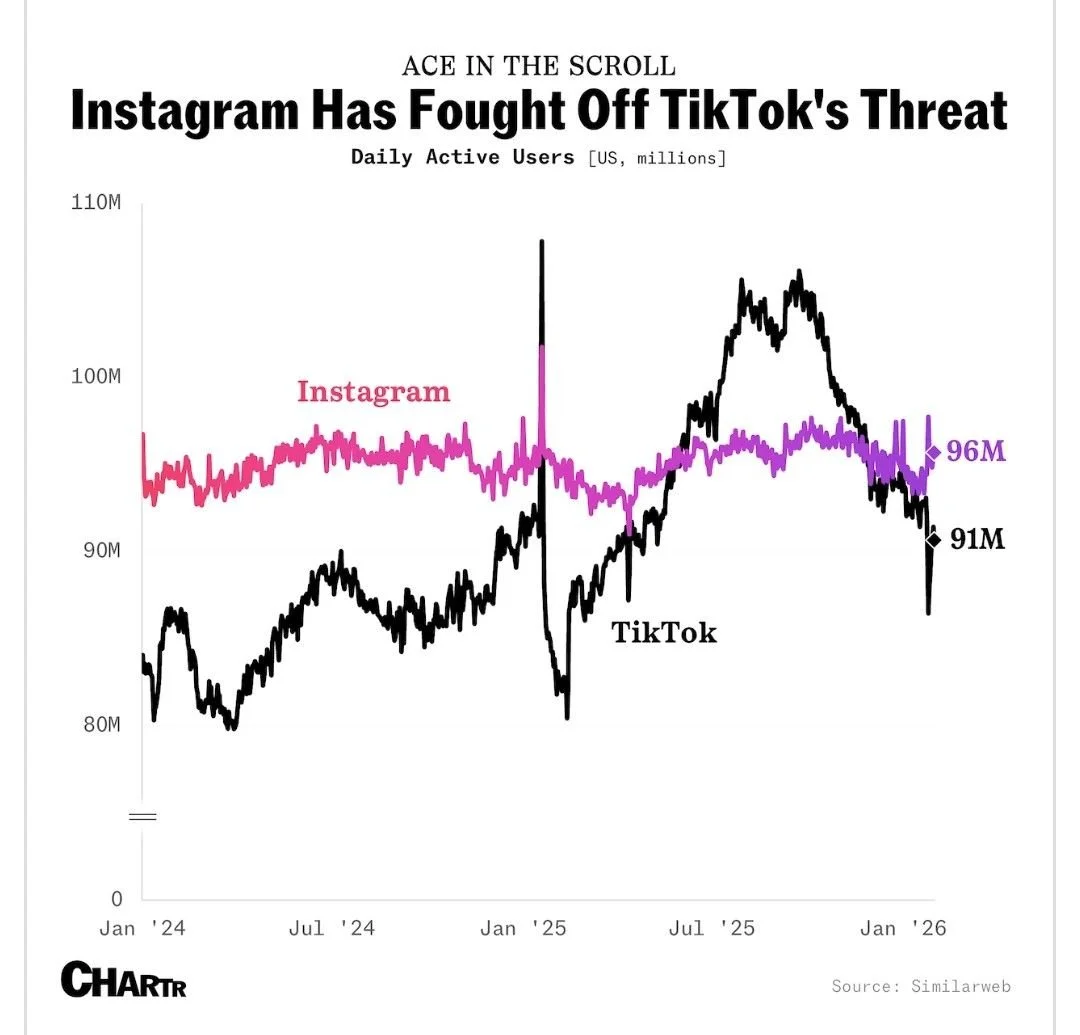
3. Instagram now reigns supreme again vs TikTok in the US based on daily active users.
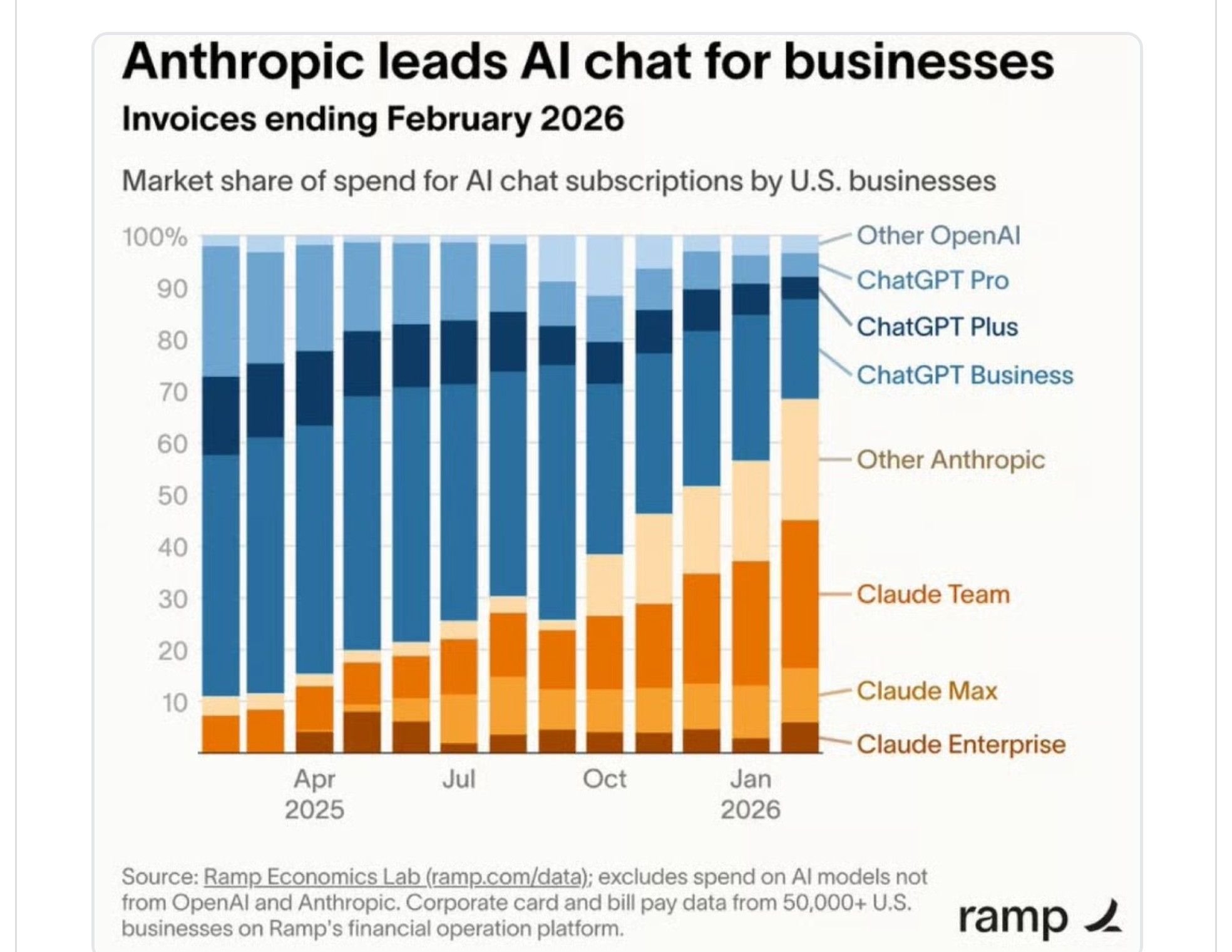
4. OpenAI's ChatGPT may have well over 900 million daily users but Anthropic's (Claude) has more subscriptions for businesses.
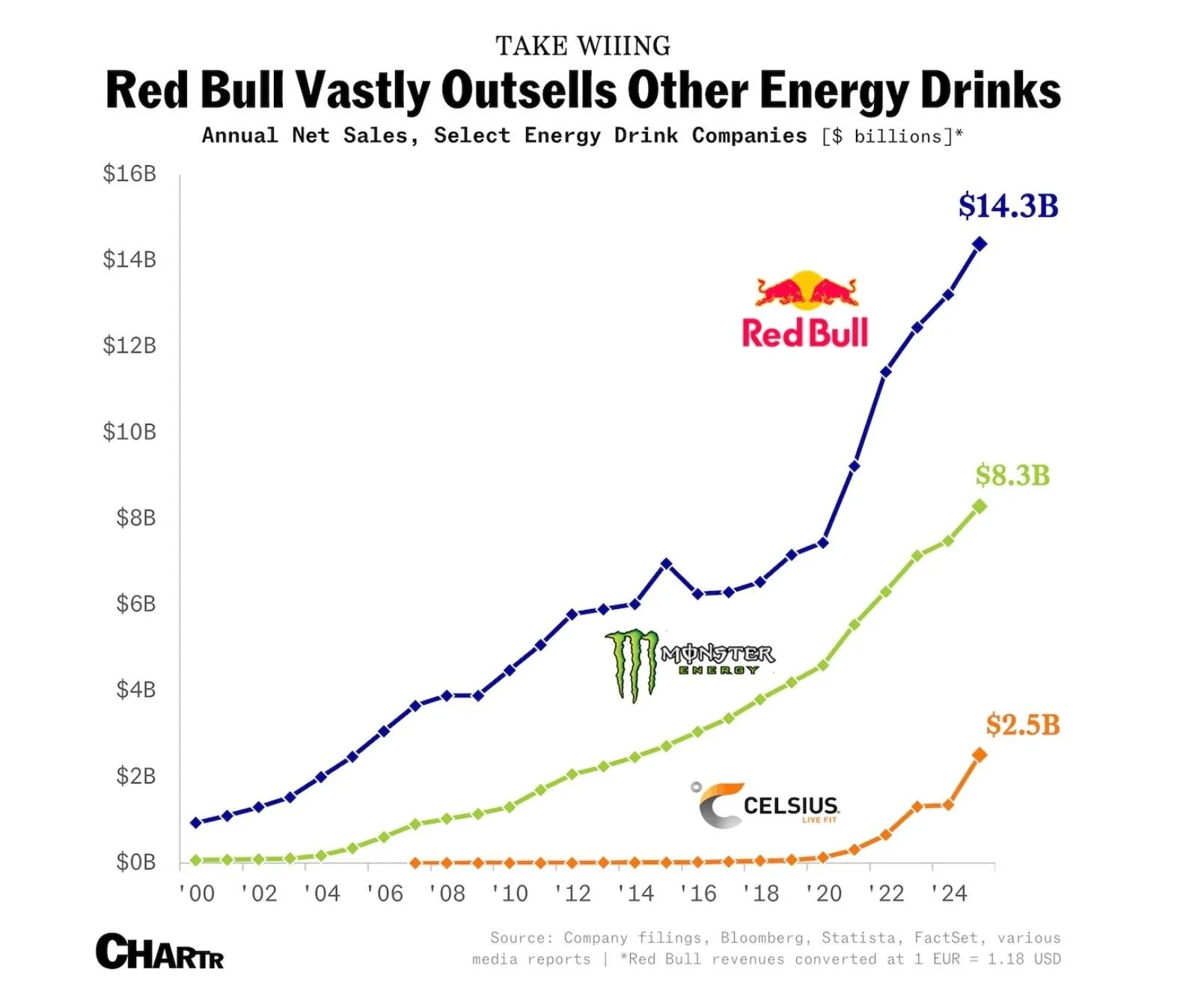
5. Red Bull continues to dominate energy drinks and just hit another inflection point. Guess Max didn't have his Red Bull this past weekend at the Australian Grand Prix.
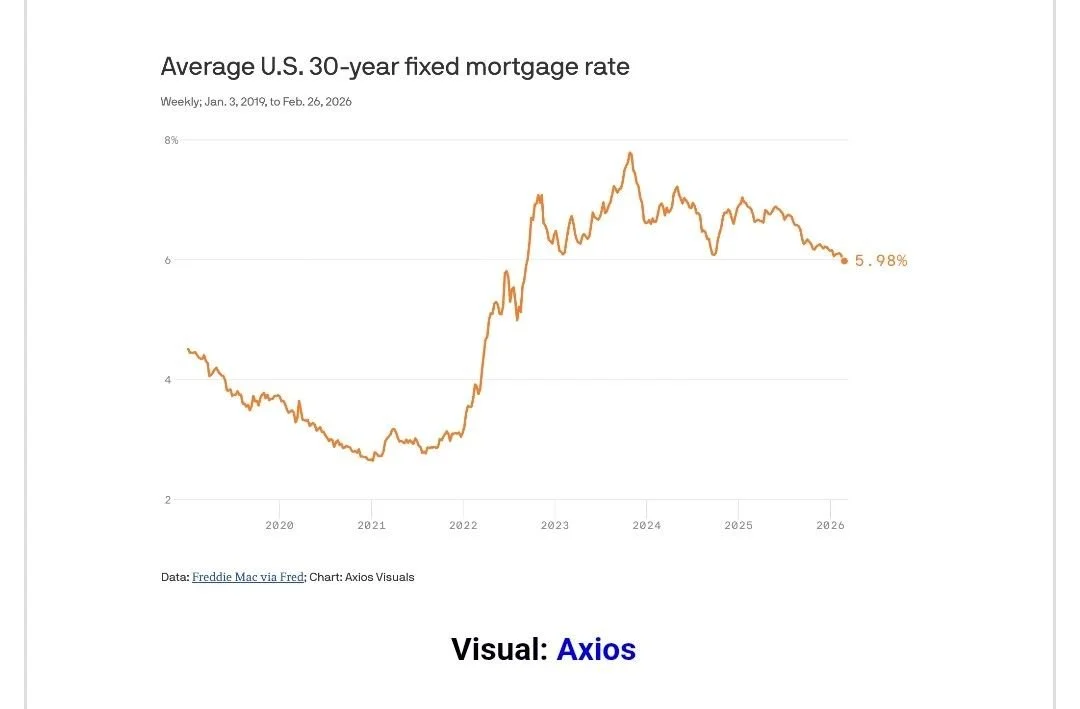
6. Mortgage rates are nearing 2022 levels.
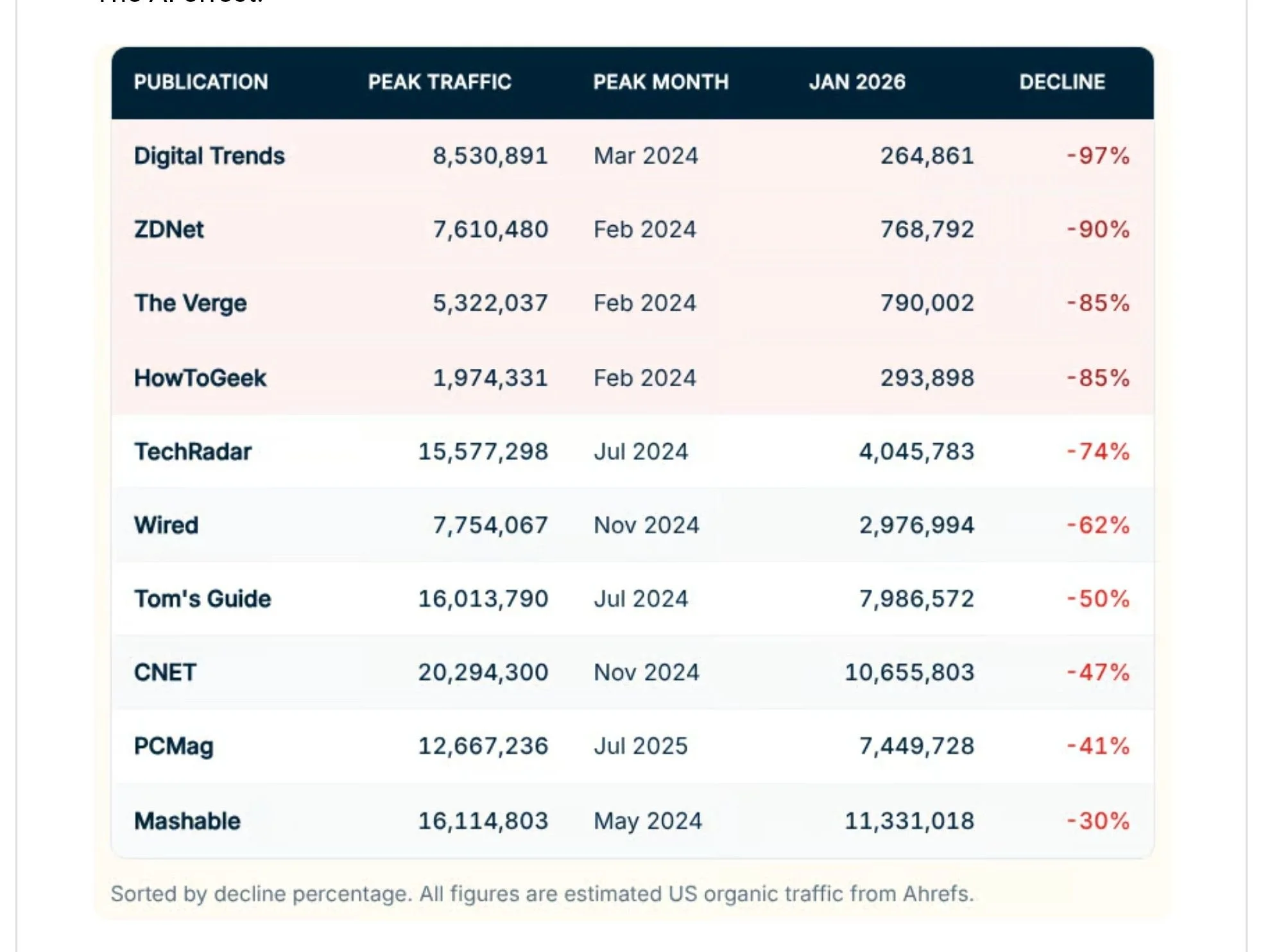
7. Major tech blogs and publishers see dramatic drops in traffic due to paywalls and generative engines such as ChatGPT and Claude.
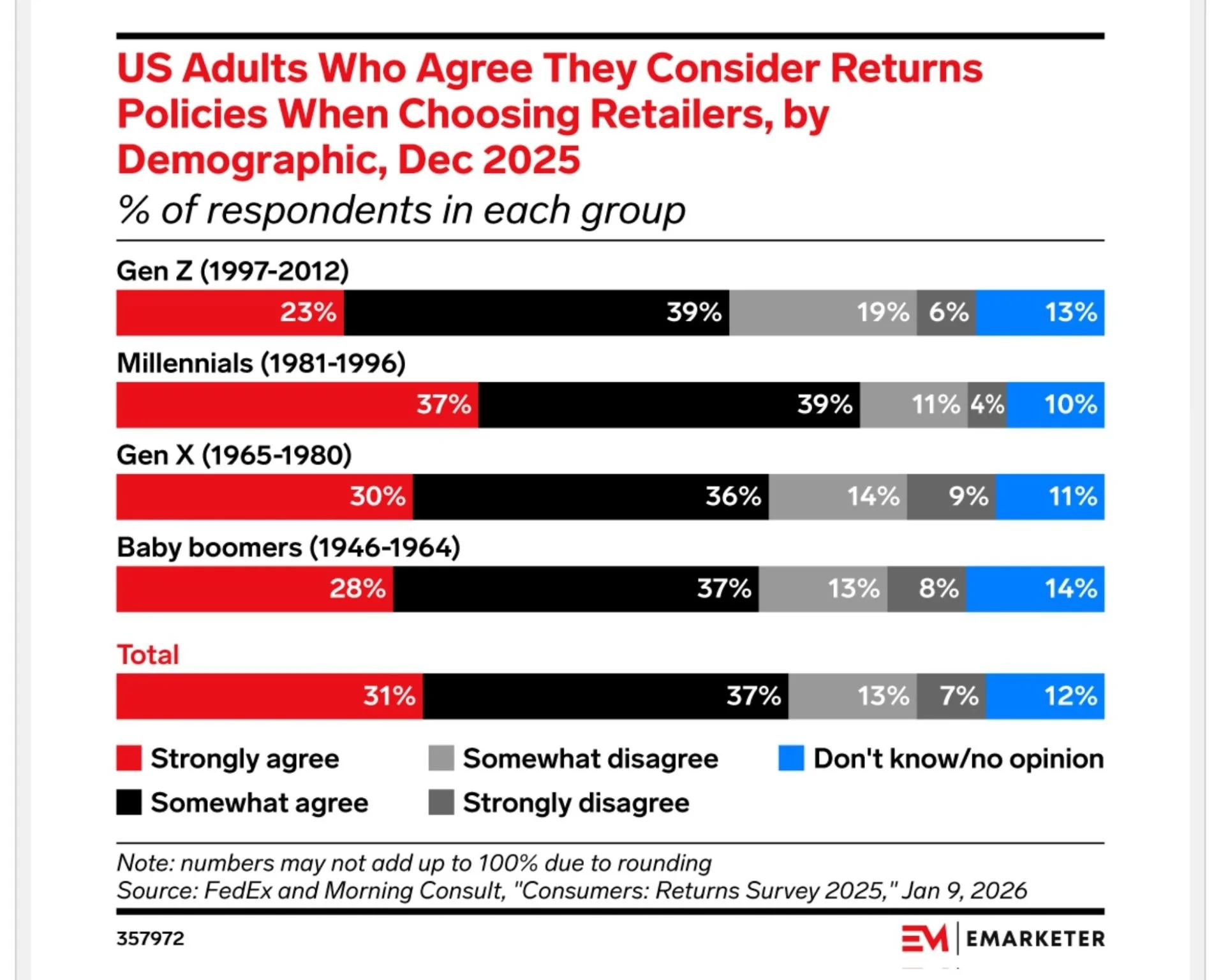
8. Greater than 50% of every shopping demographic at least "somewhat agrees" that return policies drive retailer choice.
More of the Same: AWS & Advertising Power Profit Growth Despite Rising Retail Inventories
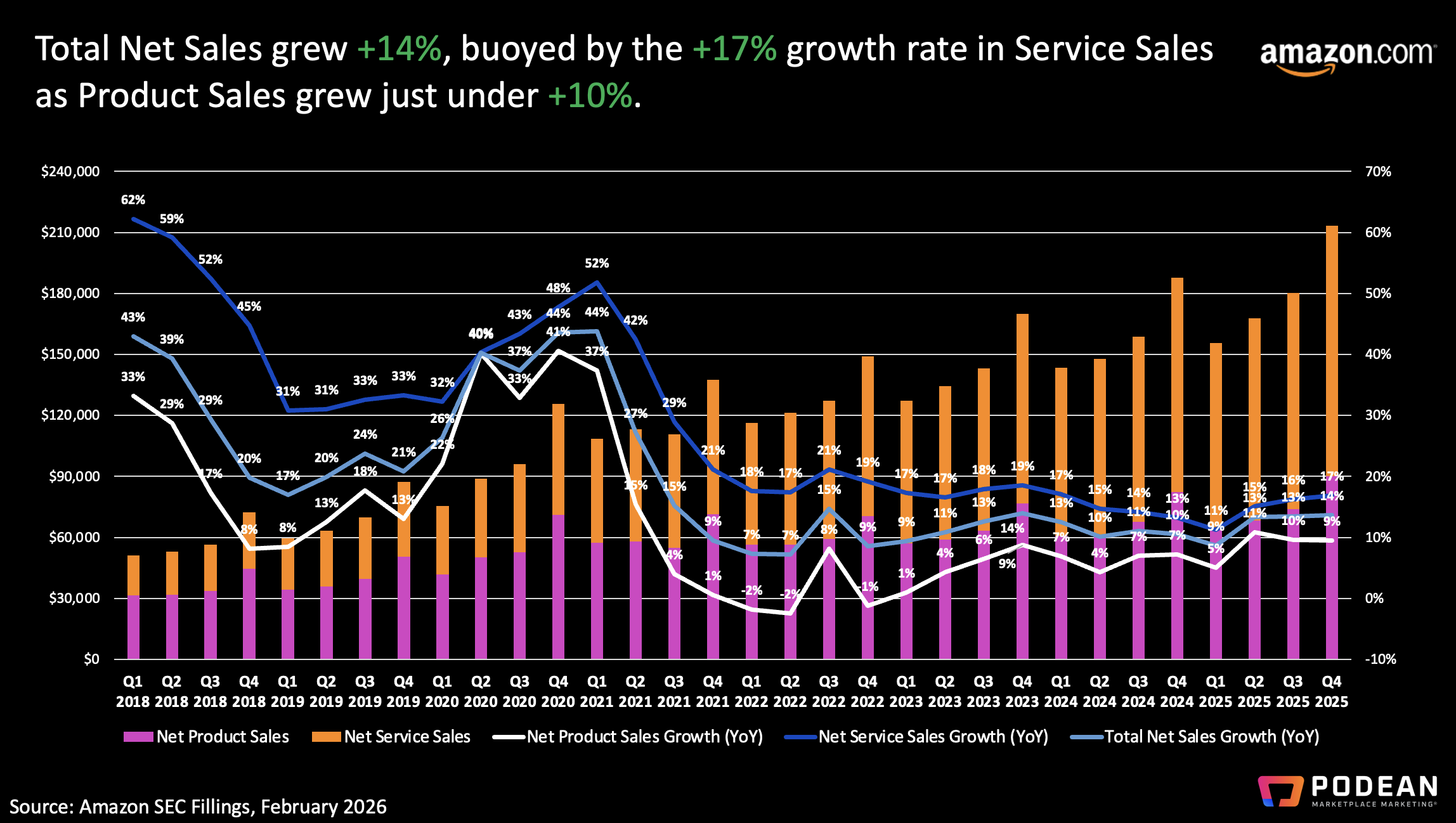
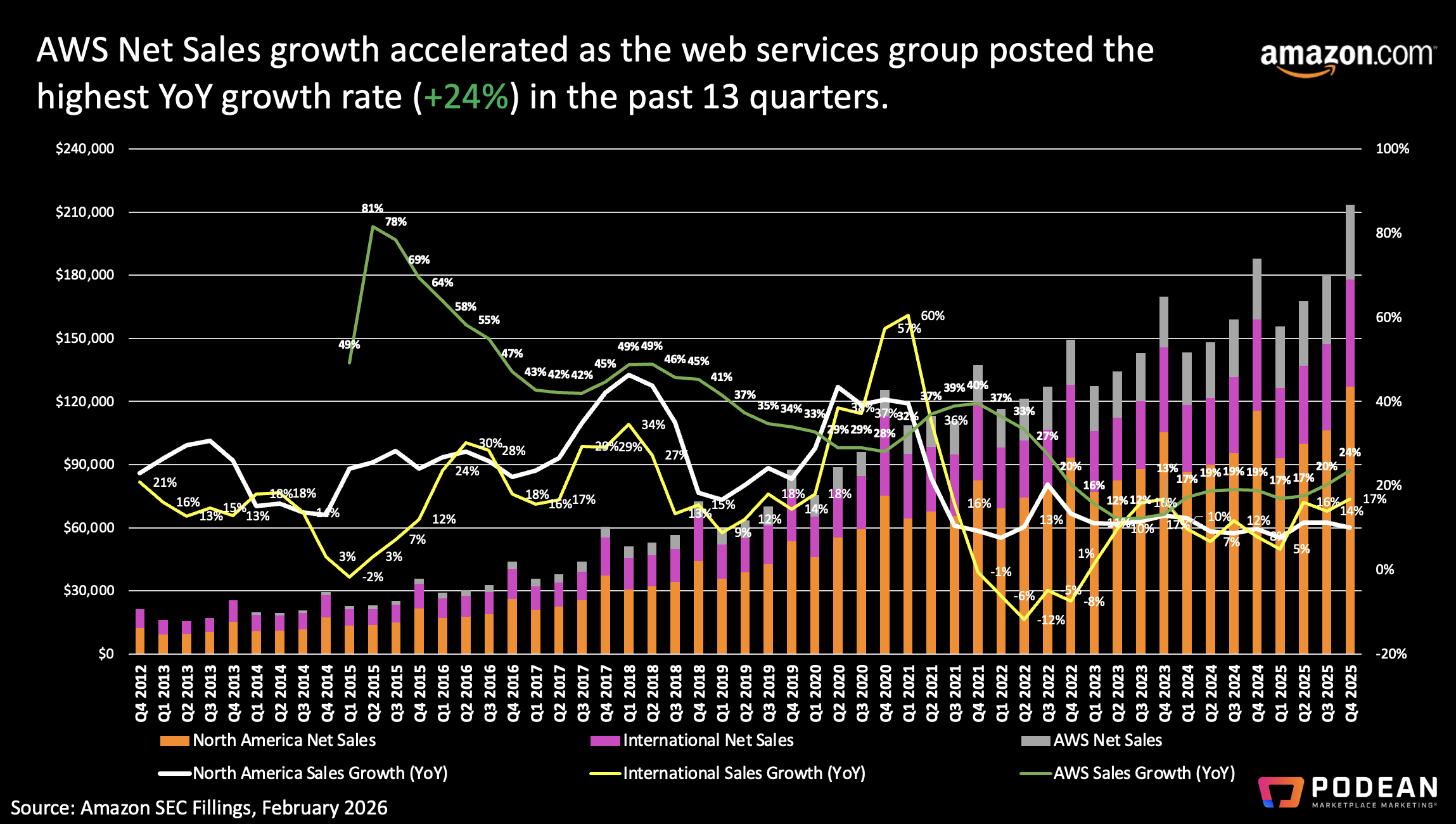
The close of fiscal year 2025 for Amazon shows much of the same from prior quarters. A continued acceleration in the services business with AWS growing 24% year-over-year as Advertising and Third-Party Seller Services each drove double digit growth. Although the margin was difficult in international markets, the North America market margin exceeded expectations despite inventories growing a bit faster than retail sales. Here are the key highlights:
AWS Accelerates Above Expectations
Amazon Web Services (AWS) grew 24% year-over-year, outpacing consensus and adding $6.8 billion in incremental sales. AWS continues to capitalize on the industry-wide shift toward cloud and focus on AI, with Google and Microsoft also reporting healthy gains, albeit from smaller bases. The growth rate was the best AWS has seen in 13 quarters.
Marketplace and Seller Services Fuel Growth
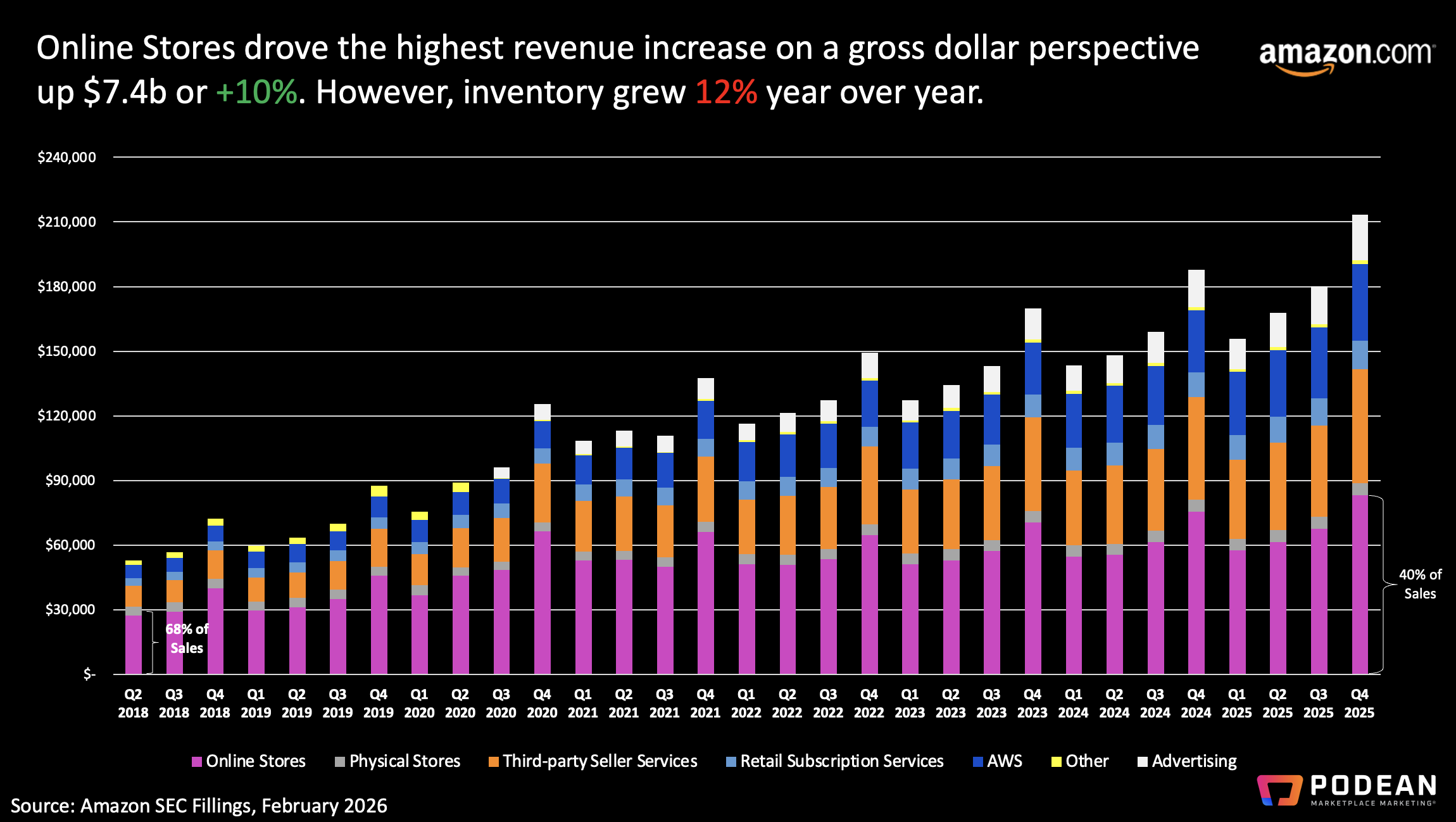
Third-Party Seller Services delivered a second third consecutive quarter of double-digit growth. Since Amazon takes a referral fee from these transactions, strong 3P sales signal not just higher volume but greater pricing power. This business now accounts for nearly 25% of the overall net service sales.
Advertising Revenue Momentum Continues
Amazon's advertising business grew 24% this quarter, building on last quarter's 24% growth. This surge comes as Amazon steadily grabs market share from rivals like The Trade Desk, strengthening its position as a key force in digital marketing. Key partnerships with players like Netflix, Roku and Spotify should keep this key source of revenue growing for future quarters.
Online Sales and Inventory Imbalance
Core online sales rose just under 10%, nearly hitting the third straight quarter of double-digit growth. However, inventory levels climbed even faster: up 12% this quarter and 14% in Q3 and 19% in Q2. While the pace of inventory accumulation is slowing, the overhang remains. This imbalance points to elevated pricing and stepped-up vendor funding as Amazon seeks to convert heavy inventory into margin gains.
Amazon's latest results underscore its ability to CONTINUE to grow both the top and bottom line-even as the retail landscape remains fiercely competitive and inventory levels remain in focus. Although the market is spooked by the $200b in planned capital expenditures, nothing here suggest Amazon slowing anytime soon.
Is AI making employees more productive?
I know. You are sick of hearing about AI. And debating whether AI is actually moving the productivity needle. So is it making everyone more productive? It seems so.
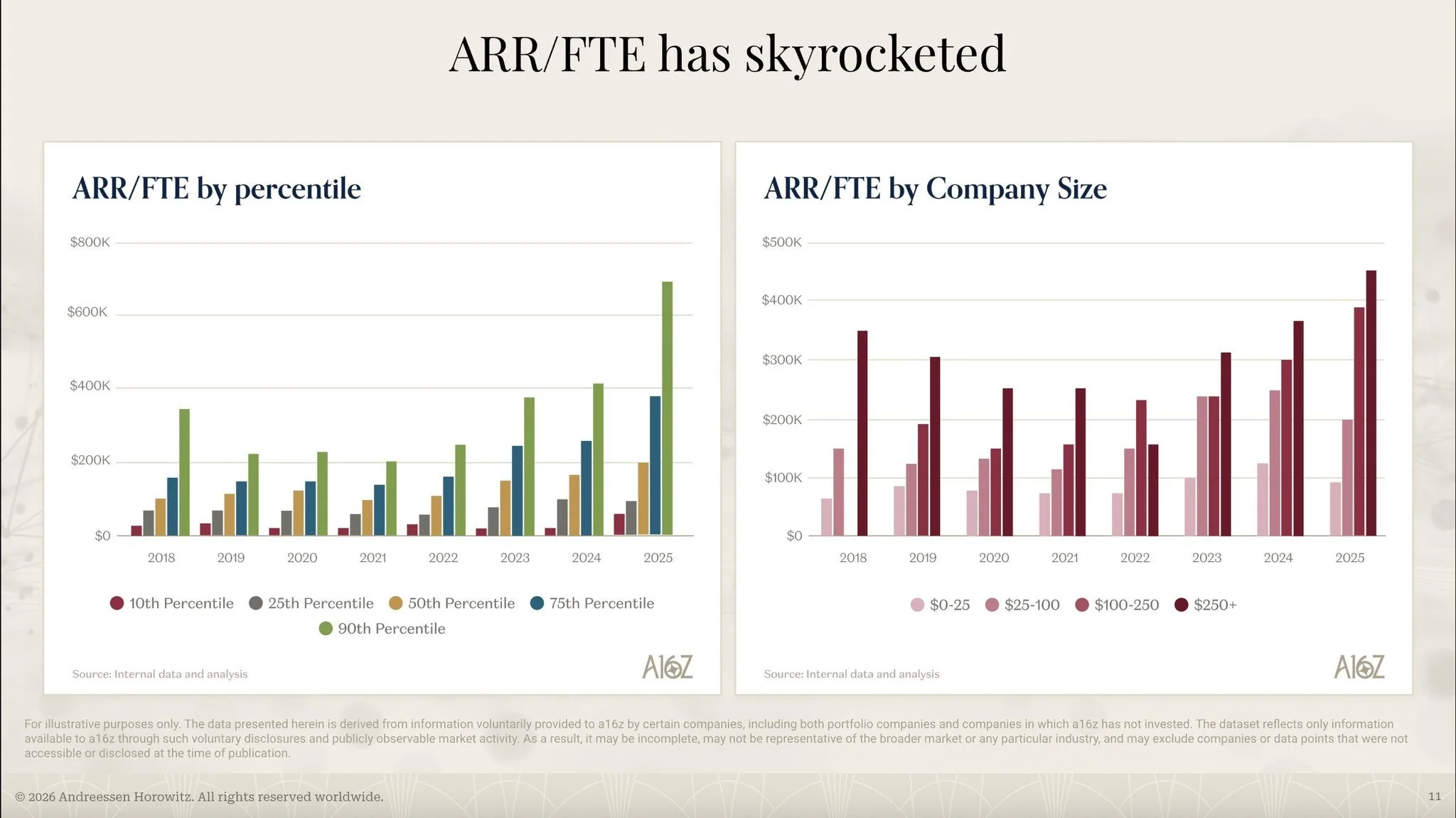
a16z’s latest benchmarks show ARR per employee at top SaaS companies has roughly tripled since 2018, with the 90th percentile now approaching about $700K ARR per FTE.
At the same time, developer behavior is loud and clear: daily installs of AI coding assistants in VS Code keep climbing, with tools like Claude Code, Gemini, and OpenAI-powered extensions seeing sustained, growing adoption rather than a fad spike. This is daily new installs on a 30‑day moving average, not just cumulative numbers creeping up in the background.
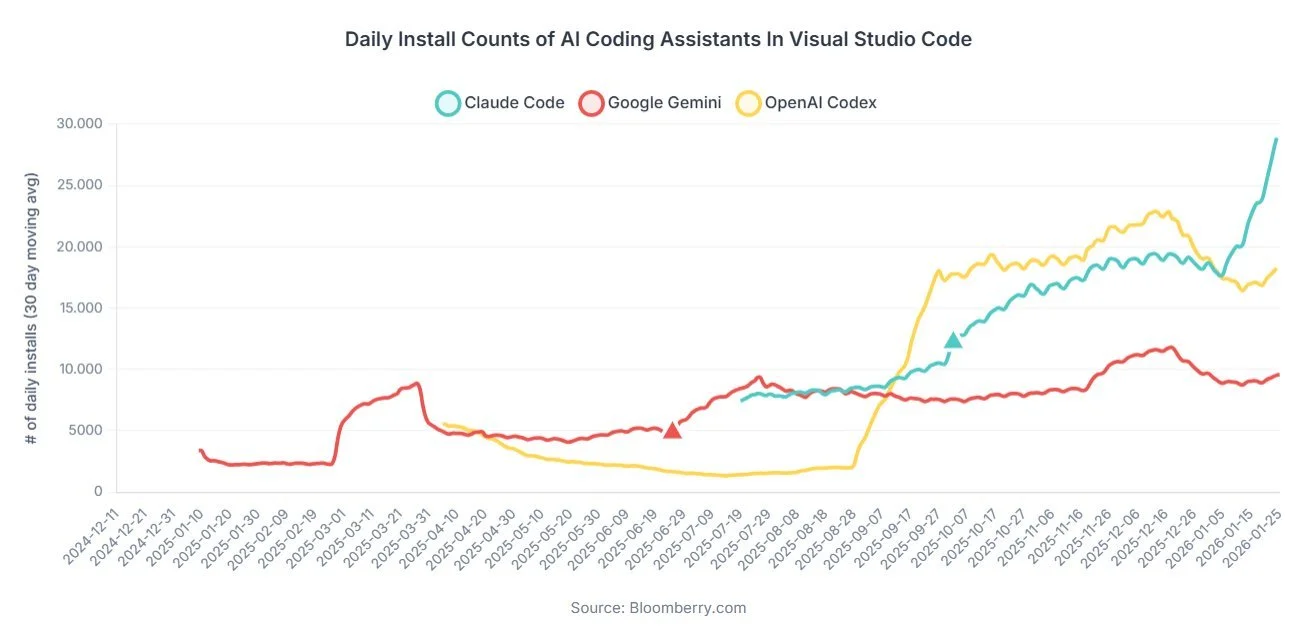
Can we attribute all of that ARR/FTE expansion to AI? Of course not. There’s pricing, product‑market fit, GTM efficiency, and macro normalization in the mix. But it’s hard to argue AI is “not working” when the highest performers are pulling away on revenue per head, while simultaneously leaning into AI tooling across their engineering orgs.
The more interesting question for operators isn’t “Is AI overrated?” but “Why aren’t we seeing these gains yet?” In most orgs, AI is still a bolt‑on assistant, not a rewired workflow in areas like coding, support, and sales ops where the leading teams are already compounding advantages.
Bottom Line: AI isn’t a silver bullet, and mis‑implemented tools can absolutely waste time but it’s clearly becoming a force multiplier, not a drag. The gap is no longer in the tech; it’s in how aggressively and thoughtfully leaders are redesigning work around it.
Well Played Zuck
What's the one thing OpenAI and Anthropic have that Mark Zuckerberg doesn't? Subscription revenue. 📰
Meta’s latest move says more about its business model than its product roadmap.
With Manus AI, a $2B+ AI agent acquisition that was already doing significant subscription revenue, Zuckerberg didn’t just buy technology—he bought a proven SaaS engine he can plug directly into Instagram, Facebook, WhatsApp, and Meta AI and own a subscription model.
Now Meta is testing premium subscriptions across all its flagship apps: “pro” AI features, advanced creation tools, workflow automation, and power-user utilities on top of the existing free social graph.
Manus will be integrated into those experiences while still sold as a standalone subscription for businesses, giving Meta both B2C and B2B recurring revenue out of the same agent stack.
Why this matters strategically:
OpenAI and Anthropic were born with subscription and API revenue at the core (ChatGPT Plus, enterprise seats, API usage), not advertising.
Meta was born as an advertising machine and is now trying to retrofit a subscription business on top of billions of users.
High-compute AI features (agents, video generation, automation) are too expensive to fund purely with ads - paywalls and tiers are the cleanest way to make that unit economics work at scale.
So Manus is Meta’s shortcut: instead of slowly building a subscription culture from scratch, Zuckerberg is using a native “AI agent SaaS” business to:
Monetize beyond impressions and clicks
Tie revenue directly to outcomes and productivity, not just attention
Narrow the strategic gap with OpenAI and Anthropic on recurring AI revenue
If you zoom out, this is Meta’s first serious attempt to answer a simple question: in an AI-first world where assistants, not feeds, are the primary interface… how do you make money when you don’t own the subscription relationship?
Zuckerberg’s answer: buy the agent, wire it into the feed, and charge for the work it does across the entire ecosystem. Well played Zuck...right before earnings this coming Wednesday.
The Rip's Matt Damon on How Netflix Has Changed
OFF TOPIC on Matt Damon's The Rip on Netflix.
Matt argued streaming hasn’t just changed where we watch movies, but what gets made, how it’s written, and who makes money from it:
On Netflix specifically, Damon says the platform now asks creators to reiterate the core plot three or four times, assuming many viewers are half-watching while on their phones interacting with their phone notifications. Additionally, big action set pieces must hit in the first 5-15 minutes of the film to keep the viewer hooked and not drifting away.
That means the product is increasingly engineered around distracted attention and algorithmic engagement, not the kind of dense, layered storytelling that rewards full focus.
Damon and Ben Affleck have tried to hack this system by structuring their Netflix deal so that not only stars but below-the-line crew share in bonuses if the film overperforms on the service.
At the same time, Netflix is rapidly building an advertising business: ads are only about 3% of overall revenue today (averaging $0.40 per month per subscriber), but ad dollars are growing much faster than subscriptions and are central to its long-term strategy.
As Netflix leans harder into advertising, the incentives to design movies that maximize time spent with early hooks, constant exposition, never-let-them-drop-out storytelling only get stronger.
Damon’s comments suggest streaming platforms function more like giant ad and engagement engines with muted creative ambition. Views & Ad Dollars > Subscriptions.
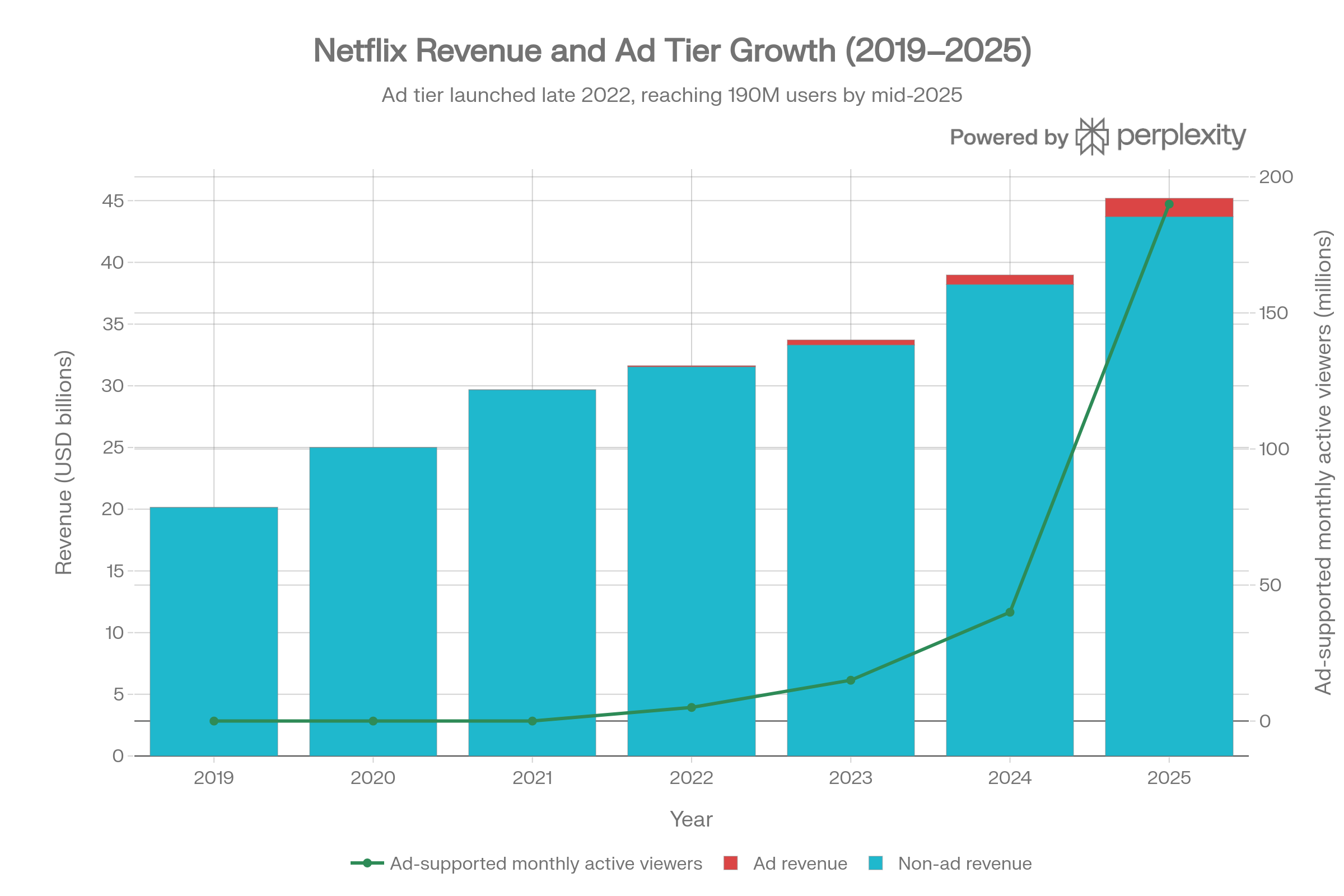
Note: Netflix modified MAUs to MAVs in Calendar Year 2025.
Quisque iaculis facilisis lacinia. Mauris euismod pellentesque tellus sit amet mollis.